
Some things do not disappear. They wait until someone remembers again.
Reflections on origin, identity
Reading the Bible with Jewish eyes is not a different interpretation. It is a confrontation.
It means entering a conversation that never closed, where the questions are older than the answers, where wrestling with the text is the point, not a sign of doubt.
This posture shapes everything on this site: the essays, the novel, the language.
Essays
Reflections on origin, memory and inherited realities.
- ALL
- IDENTITY
- ORIGIN
- MEMORY
- CULTURE
VISIT AND PROMISE — Reading the Bible with Jewish Eyes
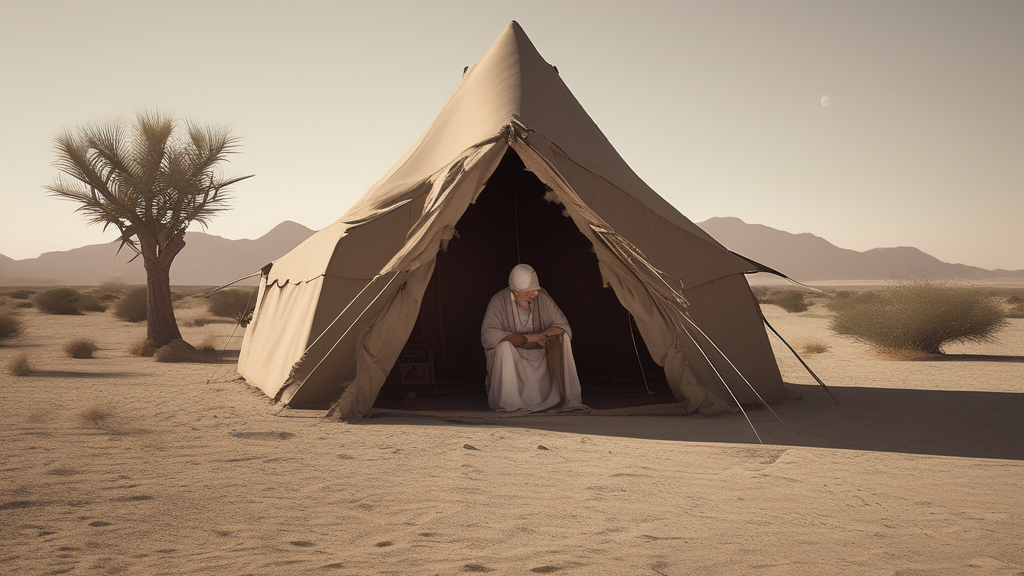
Genesis 18 is a chapter full of surprises. God does not appear in thunder or fire, but quietly, at the entrance of a tent, in the midday heat — as three travelers passing by. Abraham’s response is not prayer or theological reflection. He runs. He serves. He welcomes.
Yet this same chapter also shows Abraham standing before God, pleading boldly for a city full of strangers. Two movements — hospitality and intercession — woven together in a single afternoon.
This essay explores what Genesis 18 reveals about the nature of faith: that receiving God often happens in the ordinary, and that standing for others in prayer may be the most profound act of worship we can offer.

About origin, memory and forgotten foundations
Perhaps displacement does not begin when people leave something behind.
But when generations live within the same structures for so long that nobody asks anymore where those structures originally came from.
Over the years, I noticed that many questions surrounding faith, identity and culture eventually return to the same tension:
the distance between origin and memory.
Perhaps forgetting is therefore rarely sudden.
More often, it happens slowly.

What remains when the structure survives, but the origin fades?
Some realities do not survive because nobody sees the questions.
But because too many people intuitively understand what happens when those questions are truly asked. Perhaps displacement rarely begins with ignorance.
More often, it begins the moment people learn to live inside a story they somehow know is no longer entirely true. Not because the structure disappeared.
On the contrary. Precisely because the structure survives, returning to the origin becomes increasingly difficult. Some structures do not carry memory alone. They also provide protection. And sometimes it feels safer to inhabit a reality than to re-examine its foundations.
VISIT AND PROMISE — Reading the Bible with Jewish Eyes
Genesis 18 is a chapter full of surprises. God does not appear in thunder or fire, but quietly, at the entrance of a tent, in the midday heat — as three travelers passing by. Abraham’s response is not prayer or theological reflection. He runs. He serves. He welcomes.
Yet this same chapter also shows Abraham standing before God, pleading boldly for a city full of strangers. Two movements — hospitality and intercession — woven together in a single afternoon.
This essay explores what Genesis 18 reveals about the nature of faith: that receiving God often happens in the ordinary, and that standing for others in prayer may be the most profound act of worship we can offer.